“Reliable data” means data that is complete, consistent, traceable, and verifiable under EU rules. Anything less increases cost, audit risk, or both.
Correct Scope Definition
Before collecting numbers, importers must define the exact scope:
Correct CN code for each imported product
Correct system boundaries (what processes are included)
Correct emissions type: Direct emissions (fuel combustion, process emissions) vs. Indirect emissions (electricity use, where applicable)
Common failure: suppliers report company-level emissions instead of product-specific emissions.
EU-Accepted Calculation Methodologies
CBAM only accepts emissions calculated using EU-defined methods, not generic ESG or GHG Protocol summaries.
Accepted approaches include:
- Actual measured data (preferred)
- Mass-balance or process-based calculations
- EU default values (last resort, cost-inflating)
Calculations must be repeatable and documented.
Standardised Supplier Data Collection
Reliable data requires standardised template across suppliers.
- Standardized single CBAM-aligned data template
- One set of units (tCO₂ / tonne of product)
- Clear definitions of reporting period, production route, energy sources, allocation rules
Evidence required
Suppliers should provide evidence and this evidence must be traceable back to production:
- Energy consumption records
- Metering data
- Production volumes
- Emission factors used
- Invoices or contracts for electricity or fuels
- Carbon tax payment proof (if applicable)
Data Validation
Validation is where most importers fail.
- Arithmetic checks
- Unit consistency checks
- Comparison against sector benchmarks
- Outlier detection
- Consistency across quarters
Source of picture: https://oneclicklca.com/
Third-Party Verification
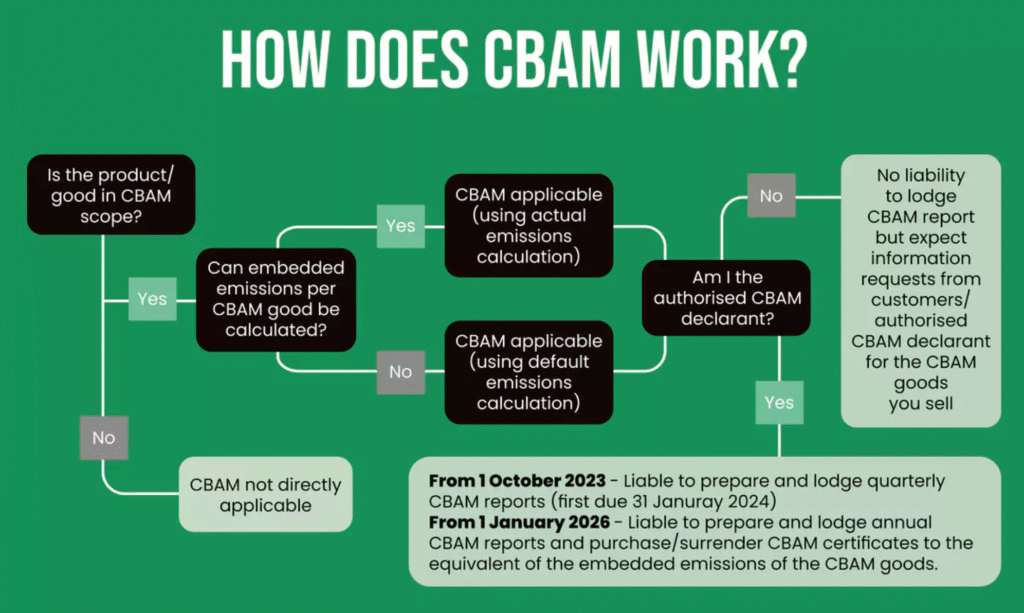
From 2026 onward, emissions data must be verified by accredited verifiers.
Preparation includes:
- Clean calculation files
- Clear audit trail
- Evidence indexed and referenced
- Methodology explanation per product
Repeatable Internal Process
Reliable data is not a one-off project, data needs to be reported on a quarterly base, and documentation needs to be retained for 5+ years.
Risks
- Suppliers resist data transparency
- Energy data quality varies by country
- EU guidance continues to evolve
- Verification capacity may tighten
- Expansion of CBAM scope increases complexity